The Complete Air Compressor Guide for South Africa
Listen to a podcast about this article
The Complete Air Compressor Guide for South Africa
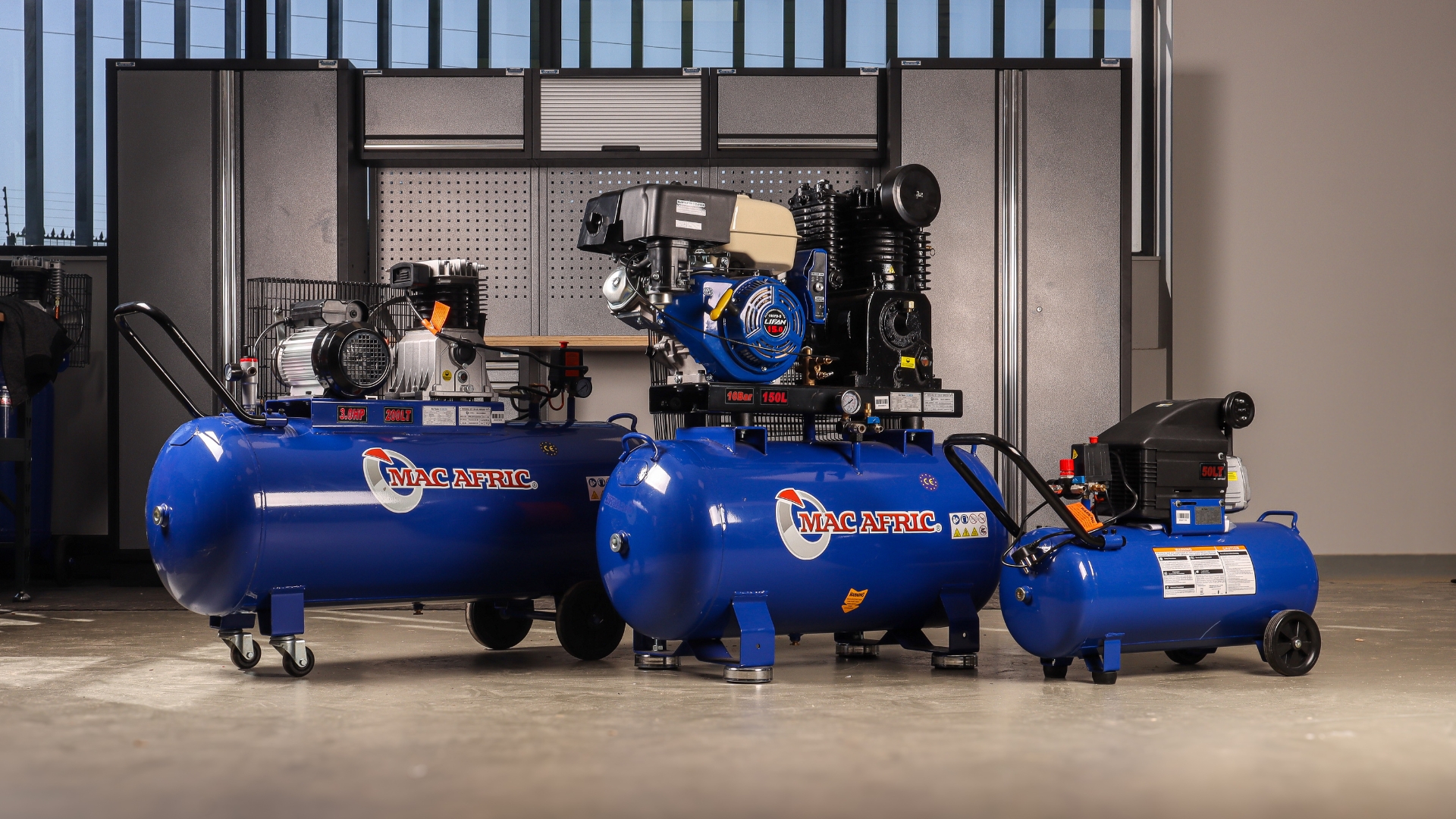
Whether you're inflating tyres in your driveway or running a spray booth in your workshop, compressed air is only useful when it's delivered consistently. Too small, and you'll watch tools sputter and paint jobs fail. Too large, and you've spent money on capacity you'll never use.
This guide cuts through the confusion. We'll cover home use, workshop applications, maintenance, troubleshooting and everything in between, using real examples from MAC AFRIC compressors available at Adendorff Machinery Mart
Beginner's Guide: Air Compressors for Home Use
If you've never owned a compressor before, the specs can feel overwhelming. Litres, PSI, CFM, horsepower it's easy to buy the wrong machine. Let's start with what actually matters.
What Size Air Compressor Do I Need for Home Use?
The right size depends on three things: what tools you want to run, how often you'll use them, and what power supply you have at home.
Most South African homes run on 230V single-phase power. That already limits how large a compressor motor you can realistically use without electrical upgrades.
| Use Case | Typical Tasks | Recommended Size |
|---|---|---|
| Light DIY & Household | Tyre inflation, dust blowing, airbrushing, staple guns | 6L – 24L |
| Garage & Home Workshop | Impact wrenches, ratchets, die grinders, spray guns | 50L – 100L |
| Frequent or Continuous Use | Spraying fences, running air tools for extended periods | 100L (belt-driven) |
Swipe to see full table →
Bigger tanks and higher airflow reduce strain on the motor and give smoother tool operation.
CFM vs PSI: What Actually Matters
This is where most buyers get confused.
PSI is pressure. Think of it as how hard the air is pushed. Most air tools work at 6 to 8 bar (90 to 116 PSI). Almost all MAC AFRIC compressors reach this pressure. PSI is rarely the limiting factor.
CFM is airflow. This is how much air the compressor can deliver continuously. This is what actually determines which tools you can run.
| Tool | CFM Demand | What Happens If Undersized |
|---|---|---|
| Tyre inflator | Low | Almost any compressor works |
| Airbrush | Low but steady | Small Silent compressors ideal |
| Impact wrench | Medium | Needs larger tank to prevent pressure drops |
| Spray gun | High & continuous | Small tanks struggle even if PSI looks correct |
Swipe to see full table →
If your compressor can't keep up with the tool's CFM demand, pressure drops and the motor runs constantly. This is why airflow matters more than maximum PSI.
Oil-Free vs Oil-Lubricated: Which Should You Choose?
| Type | Advantages | Best For |
|---|---|---|
| Oil-Free | Cleaner air, less maintenance, quieter options, lighter and more portable | Home DIY, indoor use, airbrushing, light pneumatic tools |
| Oil-Lubricated | Longer lifespan, better for sustained use, more tolerant of heat, higher airflow | Home workshops, spray painting, impact tools, regular use |
Swipe to see full table →
For Most Home Users
An oil-lubricated belt-driven compressor offers the best balance of versatility and longevity.
Portable vs Stationary Compressors
Portable compressors are easy to move, plug-and-play, and cost less upfront. But they have smaller tanks, limited airflow, and faster pressure drop. They're ideal for occasional use and quick tasks.
Stationary compressors provide larger air reserves, more stable pressure, and better tool compatibility. They take up space and are heavier, but they're best suited for garages and dedicated home workshops.
Why Tank Size Matters More Than You Think
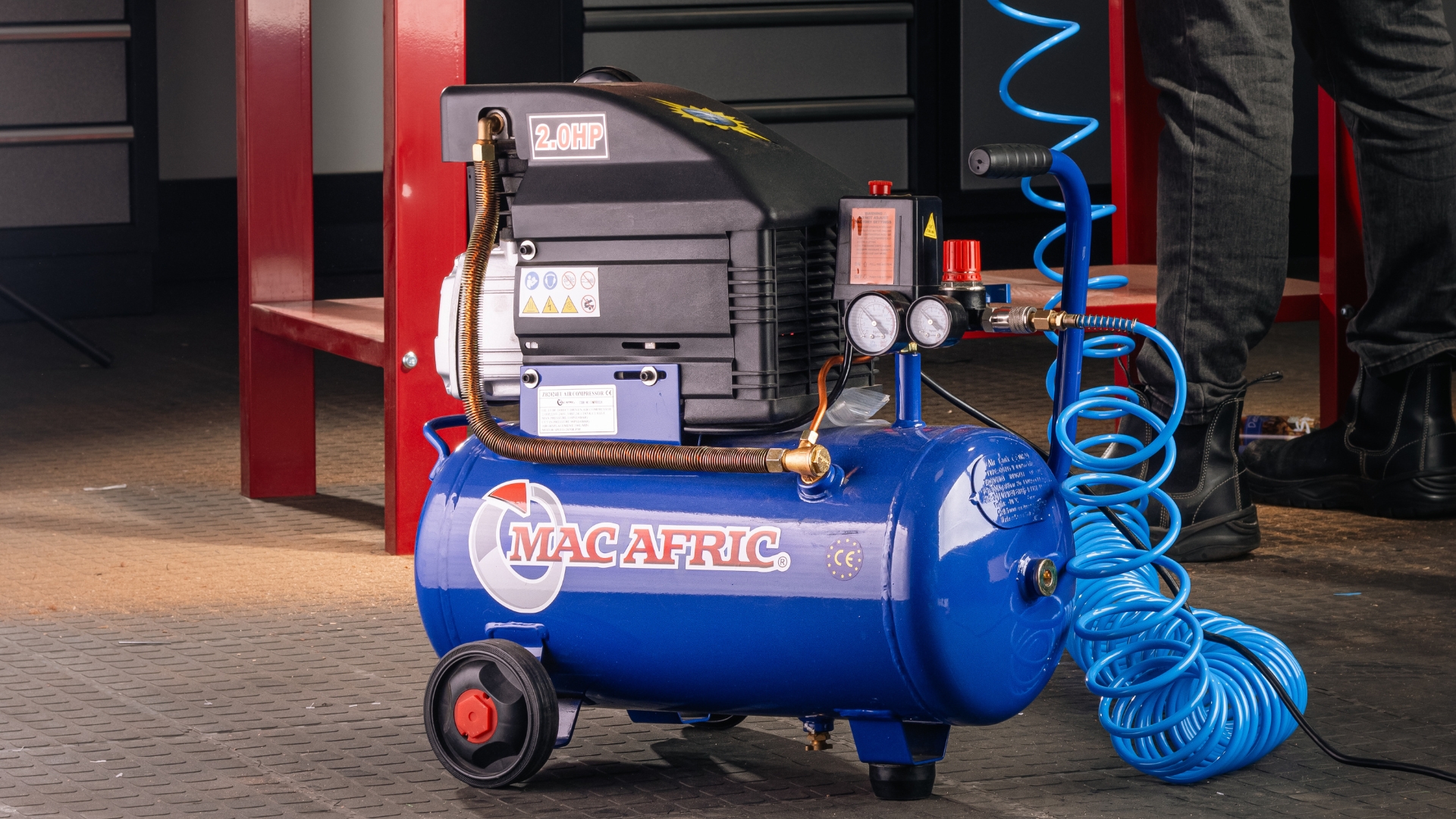
Tank size is your air buffer.
A small tank means frequent motor cycling, pressure fluctuations, and short tool run times. A larger tank means smoother airflow, less motor strain, and more consistent results.
Two compressors with the same motor power can perform very differently depending on tank size. For spray painting or air tools , tank size often matters more than horsepower.
Single-Stage vs Two-Stage Compressors
Single-stage compressors compress air in one step. They're the most common for home use simpler design, lower cost. Almost all home and garage compressors fall into this category.
Two-stage compressors compress air twice for higher efficiency. They're designed for industrial duty and typically require three-phase power, making them impractical for most homes.
If you're on standard household electricity, single-stage is the correct choice.
Why Your Compressor Keeps Switching On and Off
This is one of the most common complaints, and it's usually not a fault.
Common reasons: tank too small for the tool, tool airflow exceeds compressor output, air leaks in hoses or fittings, or the pressure switch is doing its job correctly.
Frequent cycling usually means the compressor is undersized for the task, not broken. Upgrading tank size or reducing tool demand solves the issue in most cases.
Can You Run an Air Compressor on a Generator?
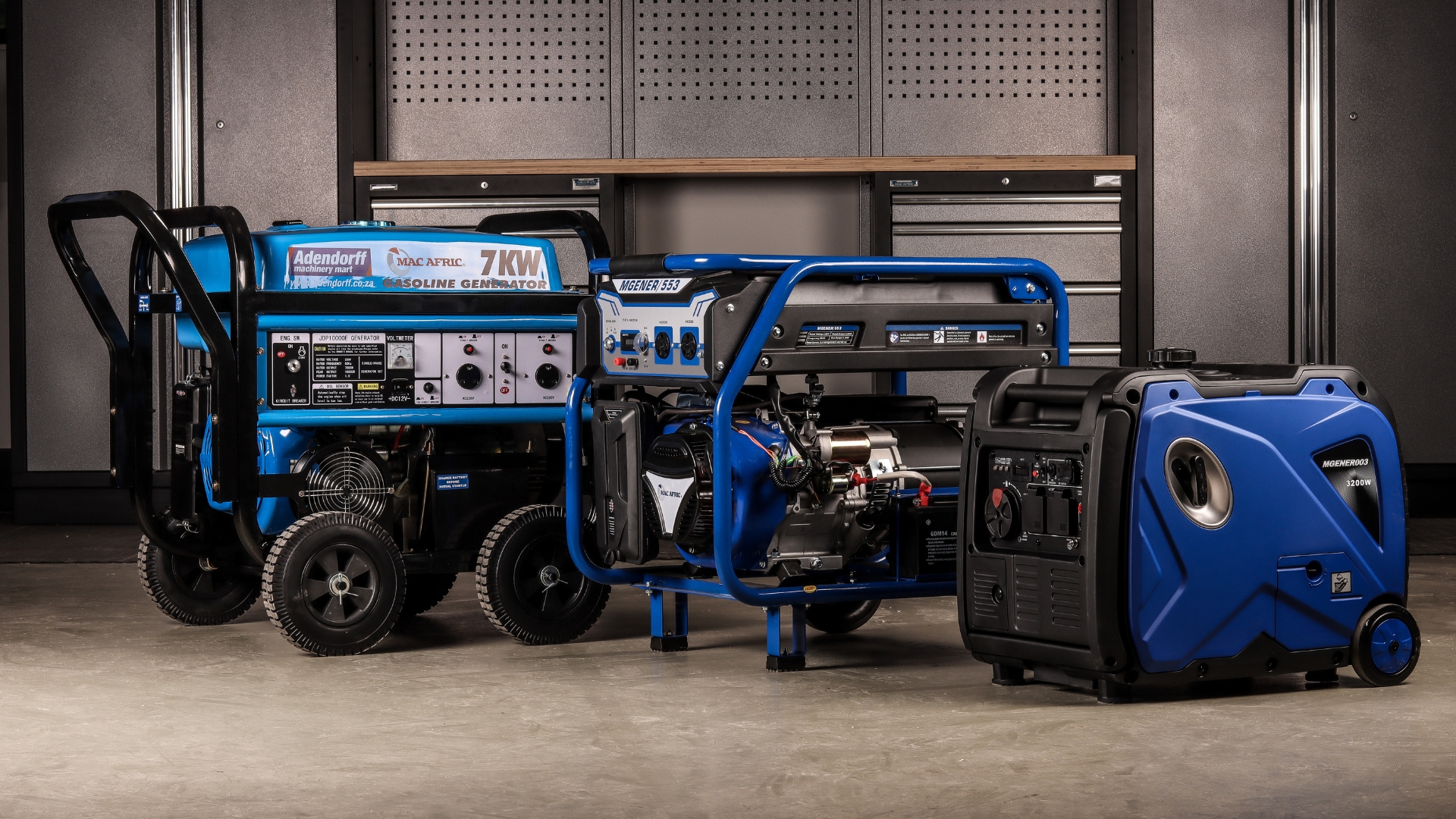
Yes, but with conditions.
Electric compressors draw high startup current much higher than their running power. The generator must exceed the compressor motor rating, stable voltage is critical, and extension leads should be avoided.
Petrol and diesel compressors avoid this issue entirely because they don't rely on electricity. Generator-powered setups are common on farms, mobile workshops and job sites, but correct sizing is essential.
For Most South African Homes
Focus on airflow and tank size first. Choose oil free for light indoor use. Choose oil-lubricated for versatility. Match the compressor to the tool, not the other way around.
Understanding these fundamentals prevents under-buying, overheating, frustration and early failure. This foundation makes every future compressor decision easier and safer.
Workshop & Small Business Guide
In a working environment, a compressor isn't a convenience tool. It's infrastructure. A suitable workshop compressor must handle continuous use, multiple tools, heat buildup, and long operating hours.
What Actually Matters for Workshop Compressors
Many buyers focus on motor size alone. This is a mistake.
For workshops, the critical factors are continuous airflow delivery, tank capacity for buffering demand, belt-driven pump design, and cooling with proper duty cycle.
For most small to medium workshops, a 100L to 300L belt-driven piston compressor is the practical starting point. Smaller direct-drive units are quickly overwhelmed once tools are used back-to-back. Larger tank sizes reduce pressure drop, motor cycling and premature wear.
How to Size a Compressor for Spray Painting and Panel Beating
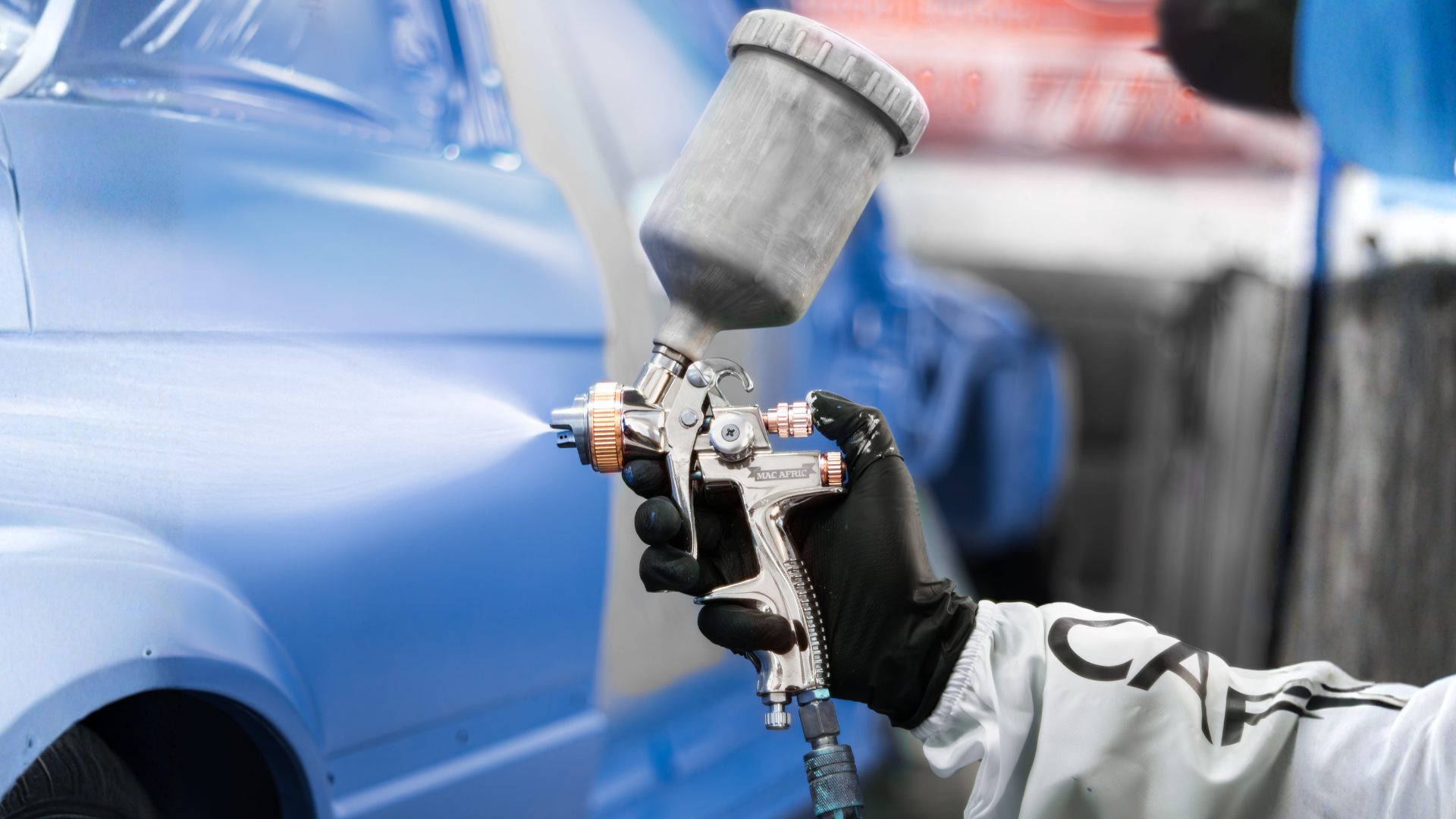
Spray painting is one of the most demanding tasks for any air compressor.
Spray guns require steady airflow, consistent pressure, and no pulsing. Even brief pressure drops cause uneven paint finish, orange peel, and inconsistent atomisation. This means airflow consistency matters more than peak pressure.
Practical Sizing for Panel Beating
Small tanks struggle even if PSI looks sufficient. Air demand is continuous, not intermittent. A minimum of 100L is recommended for occasional spraying. For regular or professional spraying, 150L to 300L is far more stable and forgiving.
Belt-driven compressors handle heat better during long spray sessions and recover faster between coats.
Air Compressor Requirements for Pneumatic Tools
Impact wrenches use air in bursts but demand high airflow during those bursts. Small compressors often reach pressure but can't maintain airflow, resulting in weak torque. A larger tank compensates for short bursts, but airflow still determines recovery time.
Die grinders and sanders are continuous airflow tools. They expose undersized compressors immediately. If your grinder slows down or stalls, the compressor airflow is insufficient, regardless of tank pressure.
For regular use, avoid small direct-drive compressors and prioritise airflow and tank size. This is why many workshops upgrade even when their compressor is technically "working".
Why Your Compressor Can't Keep Up With Your Tools
This problem is almost never caused by a faulty compressor.
The most common reasons: tool airflow exceeds compressor output, tank too small for sustained demand, multiple tools running simultaneously, or heat buildup reducing efficiency.
When the motor runs continuously and pressure never recovers, the compressor is undersized for the workload. The solution is not higher PSI. The solution is more airflow and air storage.
220V vs 380V Air Compressors: What's the Difference?
| Power Type | Characteristics | Best For |
|---|---|---|
| 220V Single-Phase | Common in homes and small workshops, limited motor size, easier installation | Home workshops, light to moderate use |
| 380V Three-Phase | Higher efficiency, lower amperage per phase, better for continuous operation | Commercial and industrial workshops |
Swipe to see full table →
If your workshop runs multiple air tools all day, three-phase power unlocks a completely different class of compressor. However, upgrading power supply must be planned carefully and professionally.
Screw Compressors vs Piston Compressors
Piston compressors have lower upfront cost, simple maintenance, and are ideal for intermittent to moderate continuous use. Most small businesses operate successfully with piston compressors.
Screw compressors are designed for constant, uninterrupted airflow. They're quieter and smoother but require higher initial investment.
A screw compressor only makes sense when air demand is constant all day, downtime is costly, or multiple operators rely on air simultaneously. For many small workshops, upgrading to a larger piston unit is more cost-effective than jumping to screw technology.
How Many Tools Can Run Off One Compressor?
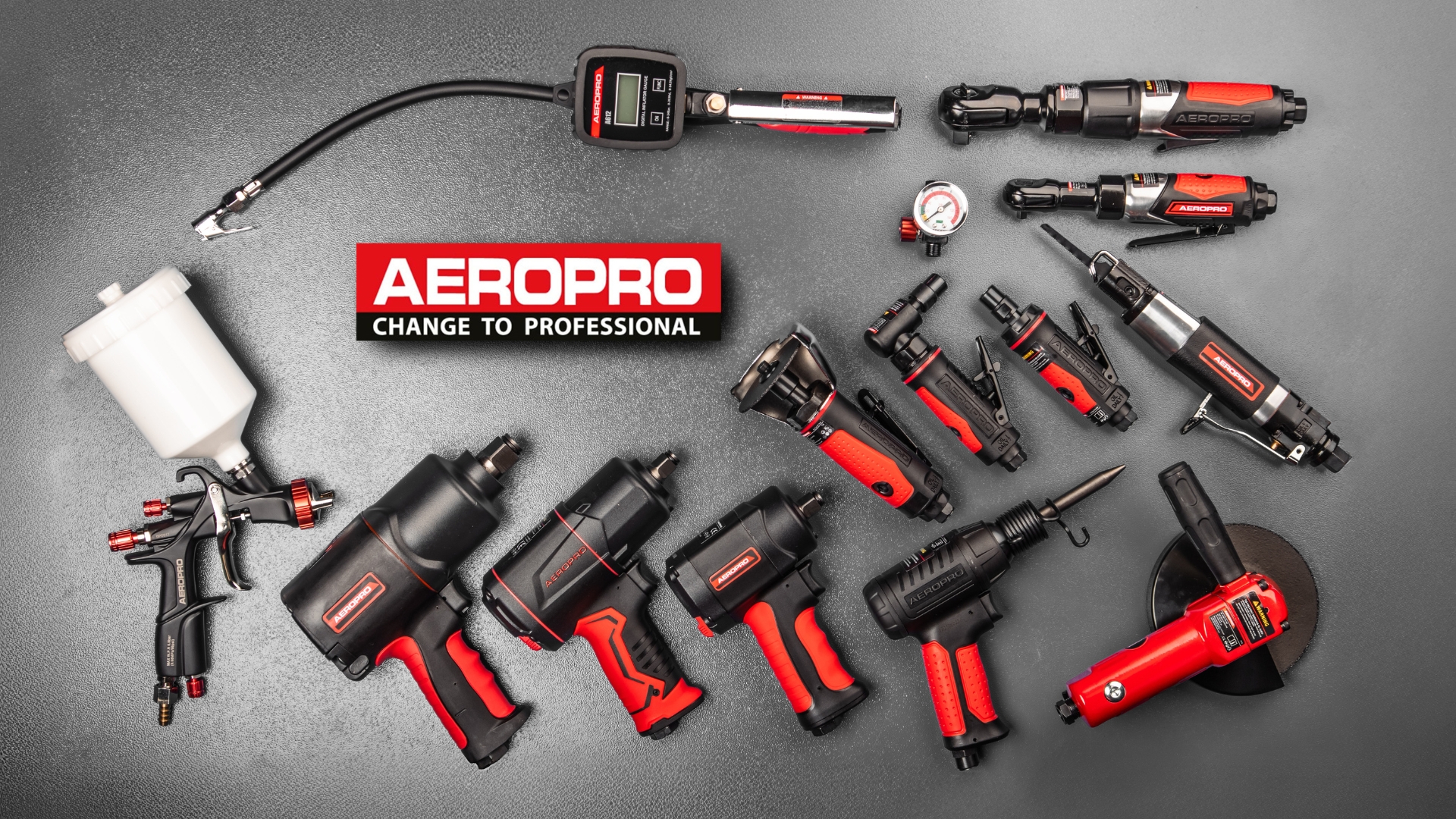
There's no fixed number. It depends on total combined CFM demand, whether tools run continuously or intermittently, and tank size and recovery rate.
Two impact wrenches used occasionally may work on one compressor. Two sanders running continuously will overwhelm most small units.
Always calculate combined airflow demand, then add a safety margin. Compressors should never operate permanently at maximum output this shortens lifespan and increases failure risk.
Trade-Level Takeaway
In workshops and small businesses, airflow is king, tank size is your buffer, belt-driven designs last longer, and power supply limits must be respected. Most compressor problems are sizing problems, not quality problems.
Maintenance, Longevity and Troubleshooting
Correct maintenance isn't optional. It directly affects tool performance, operating costs and safety.
How Often Should You Service an Air Compressor?
| Usage Level | Maintenance Tasks |
|---|---|
| Light Use (Occasional DIY) |
Visual inspection before use, drain tank after every session, check fittings and hoses monthly |
| Regular Workshop Use (Daily operation) |
Drain tank daily, check oil levels weekly on oil-lubricated units, inspect belts, fittings and filters monthly |
| High-Duty Use (Continuous or multi-tool) |
Daily draining, weekly inspection of all wear components, scheduled servicing by operating hours |
Swipe to see full table →
Neglecting basic checks leads to pressure loss, overheating and premature pump failure.
Why Is My Compressor Losing Pressure?
Pressure loss is one of the most common complaints and is rarely caused by a failed pump.
Common causes: air leaks at couplers or hose fittings, faulty non-return valve, worn pressure relief valve, or tank drain valve not sealing correctly.
How to diagnose: listen for hissing when the compressor is off, spray soapy water on fittings and joints, or check pressure drop with no tool connected.
Small leaks force the compressor to run more often, increasing wear and electricity consumption.
Water in Air Lines: Causes, Problems and Fixes
Water is a natural by-product of compressed air. When air is compressed, moisture condenses and settles in the tank.
Why water is a problem: rust inside the tank, corrosion in air tools , paint defects during spraying, and reduced tool lifespan.
Warm days and high humidity accelerate condensation, especially in coastal and summer rainfall regions of South Africa.
How to Control Moisture
Drain tanks daily, install water traps at the outlet, and keep airlines as short as practical. Ignoring moisture is one of the fastest ways to damage both compressors and tools.
How to Drain a Compressor Tank Correctly
Draining incorrectly is almost as bad as not draining at all.
Correct procedure: Switch off and unplug the compressor, release air pressure gradually, open the drain valve fully, allow water and residue to escape, then close the valve firmly but don't overtighten.
Draining while pressure is still present helps push out moisture more effectively. Never leave the drain valve partially open during operation.
Why Compressors Overheat and How to Prevent It
Overheating is usually a symptom, not the root problem.
Common causes: undersized compressor for the workload, poor ventilation, continuous running without recovery time, or dirty cooling fins and blocked airflow.
Prevention: Match compressor airflow to tool demand, allow cooling breaks during heavy use, keep the unit clean and well-ventilated, and avoid extension leads that cause voltage drop.
Heat shortens oil life, damages seals and accelerates component wear.
Common Air Compressor Noises and What They Mean
| Noise Type | Likely Cause |
|---|---|
| Rattling or knocking | Loose bolts, worn bearings or piston issues |
| Hissing after shutdown | Leaking non-return valve or pressure release valve |
| Screeching | Belt misalignment or lack of lubrication |
| Loud clicking | Normal pressure switch operation (unless excessively frequent) |
Swipe to see full table →
Noise changes are early warning signs. Addressing them early prevents expensive failures.
Can a Compressor Explode? Safety Myths Explained
Modern air compressors are designed with multiple safety systems. Tank explosions are extremely rare when equipment is maintained correctly.
Real risks: severe internal corrosion from trapped water, tampered or faulty pressure relief valves, or operating beyond rated pressure.
Safety facts: Tanks are pressure tested, relief valves prevent over-pressurisation, and failures usually result from neglect, not design.
Regular draining and basic inspections eliminate nearly all risk. Adendorff's warranty and safety guidelines are built around proper maintenance and correct usage.
Most Compressor Failures Are Preventable
Daily draining, early leak detection, adequate airflow sizing, and basic inspections dramatically extend compressor life, improve tool performance and reduce downtime.
Painting, DIY and Special Use Cases
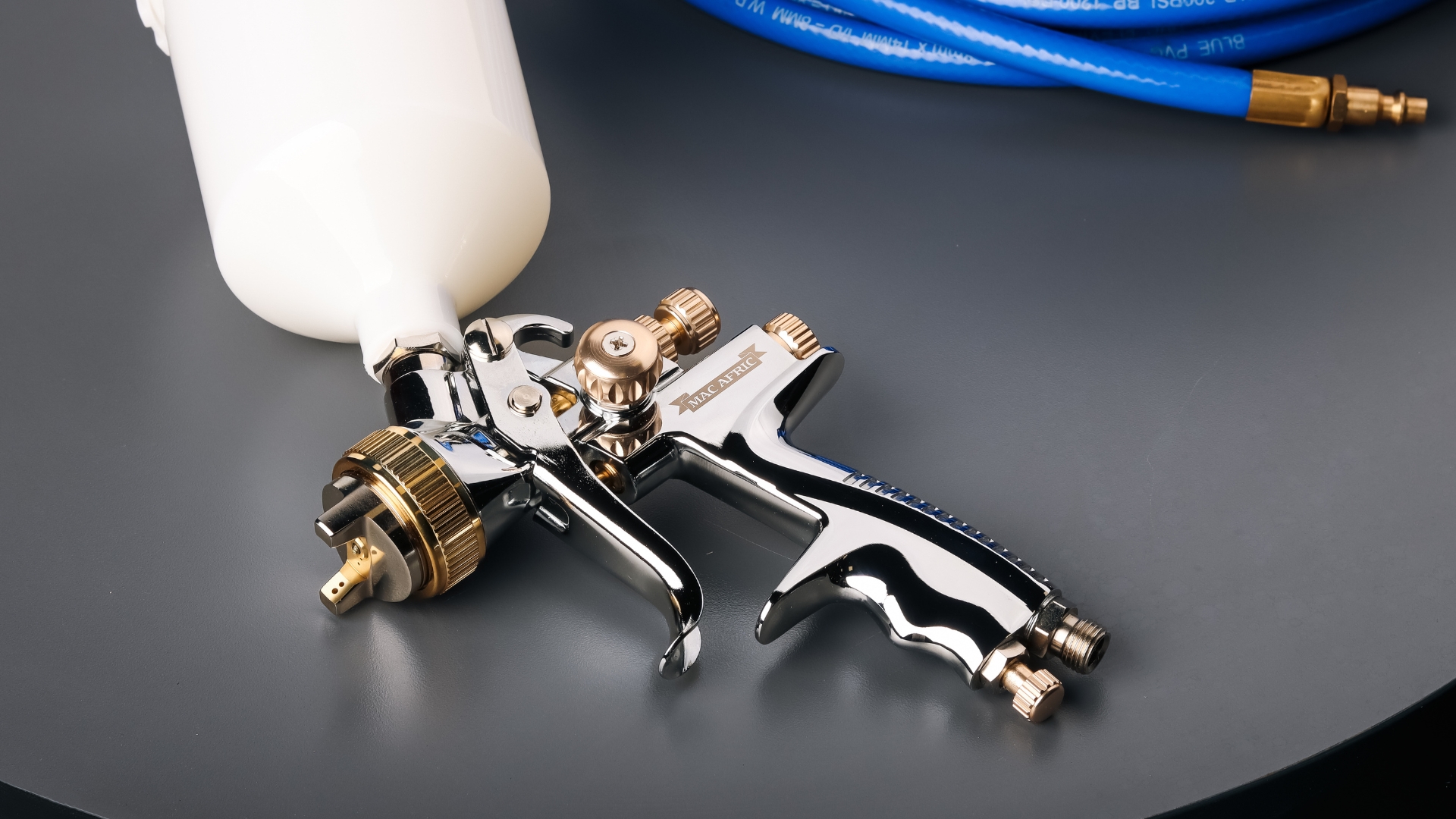
Spray painting, woodworking, finishing and serious DIY use all demand specific compressor characteristics. Many paint jobs fail due to air supply issues, not technique.
What Compressor Do I Need for Spray Painting Cars?
Spray painting vehicles is one of the most demanding tasks for any air compressor.
Spray guns need continuous airflow, stable pressure, and dry air. Unlike impact tools, spraying doesn't allow recovery time. The air demand is constant from trigger pull to release.
A minimum of 100L tank capacity is recommended for occasional vehicle painting. For full panels or repeated jobs, 150L or larger provides far more stable results.
Belt-driven compressors cope better with heat and sustained airflow during long spray sessions.
Can You Paint With a Small Compressor?
Yes, but with serious limitations.
When small compressors work: touch-ups, small parts, furniture pieces, and spot repairs. Using a small spray gun and short bursts, a small compressor can produce acceptable results.
Where small compressors fail: full car panels, roofs or bonnets, and continuous spraying. The compressor empties the tank faster than it can refill, causing pressure drop and uneven paint finish.
Small compressors aren't faulty they're simply working beyond their design limits.
Best Compressors for DIY Woodworking and Finishing
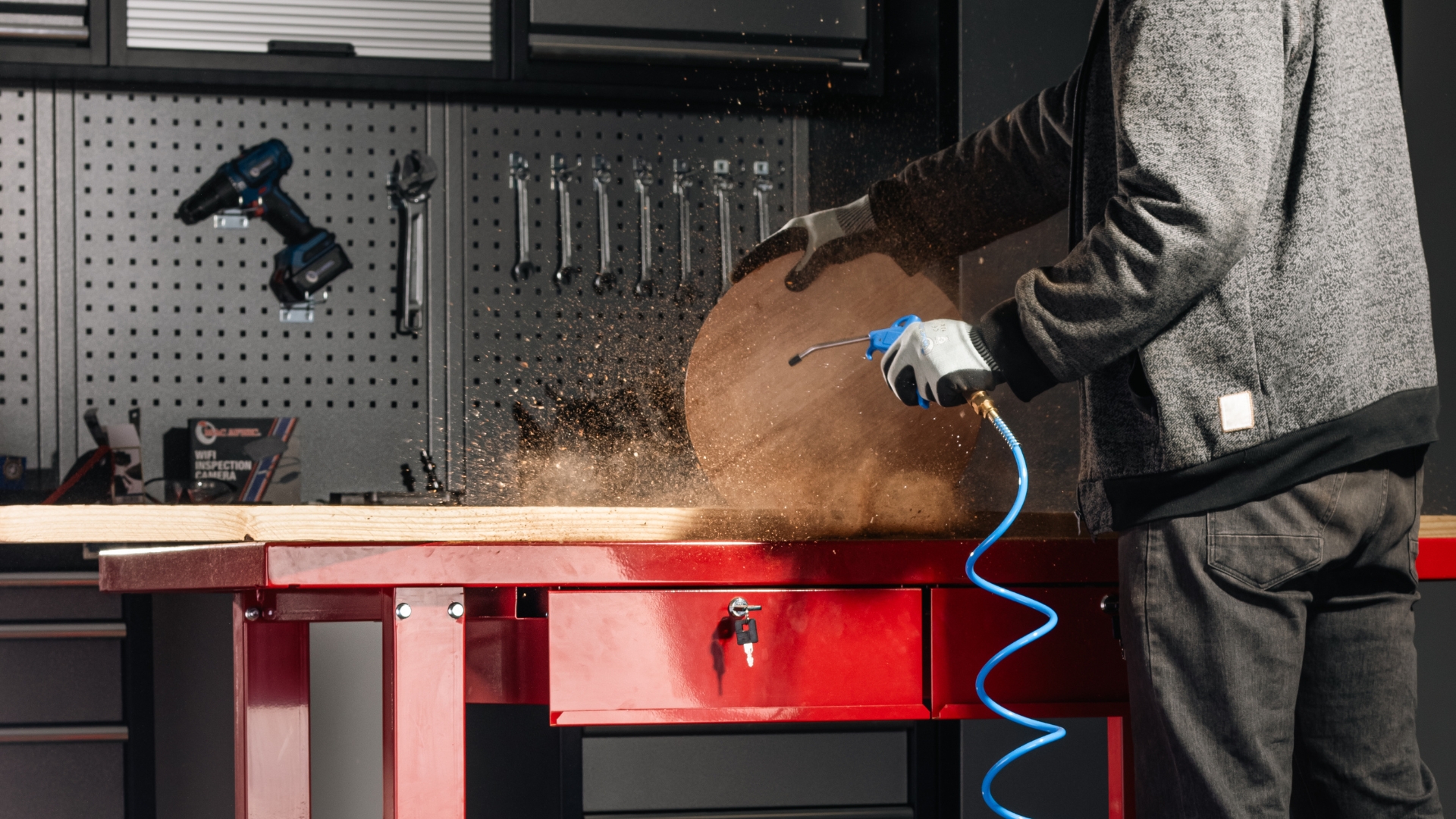
Woodworking spray work includes varnish, lacquer, clear coat, and sealants. These finishes highlight airflow inconsistency immediately.
What matters most: smooth airflow, clean air, and quiet operation for indoor use.
oil free Silent compressors are popular for woodworking due to clean air delivery and low noise. However, tank size still matters. A 50L to 100L unit provides far better consistency than ultra-compact models.
Short, controlled spray passes help reduce compressor strain and improve finish quality.
Air Compressors for Home Garages: What Actually Works
Home garages often combine multiple tasks: inflation, cleaning, painting, and light air tools .
For most garages, 50L to 100L is the sweet spot. Smaller tanks feel underpowered very quickly once spraying or air tools are introduced.
Garage users benefit more from airflow and tank capacity than from chasing higher motor power numbers.
Why Moisture Ruins Paint Jobs and How to Stop It
Moisture is the silent enemy of spray painting.
What moisture does to paint: fish eyes, bubbles, patchy gloss, and poor adhesion.
Compressed air cools rapidly, forcing moisture to condense inside the tank and air lines. This is especially problematic in warm and humid South African conditions.
How to Control Moisture
Drain the compressor tank daily, fit a water trap at the outlet, keep hoses short, and allow the compressor to cool between sessions. Moisture control is as important as gun technique when painting.
Compressor Setup for HVLP Spray Guns
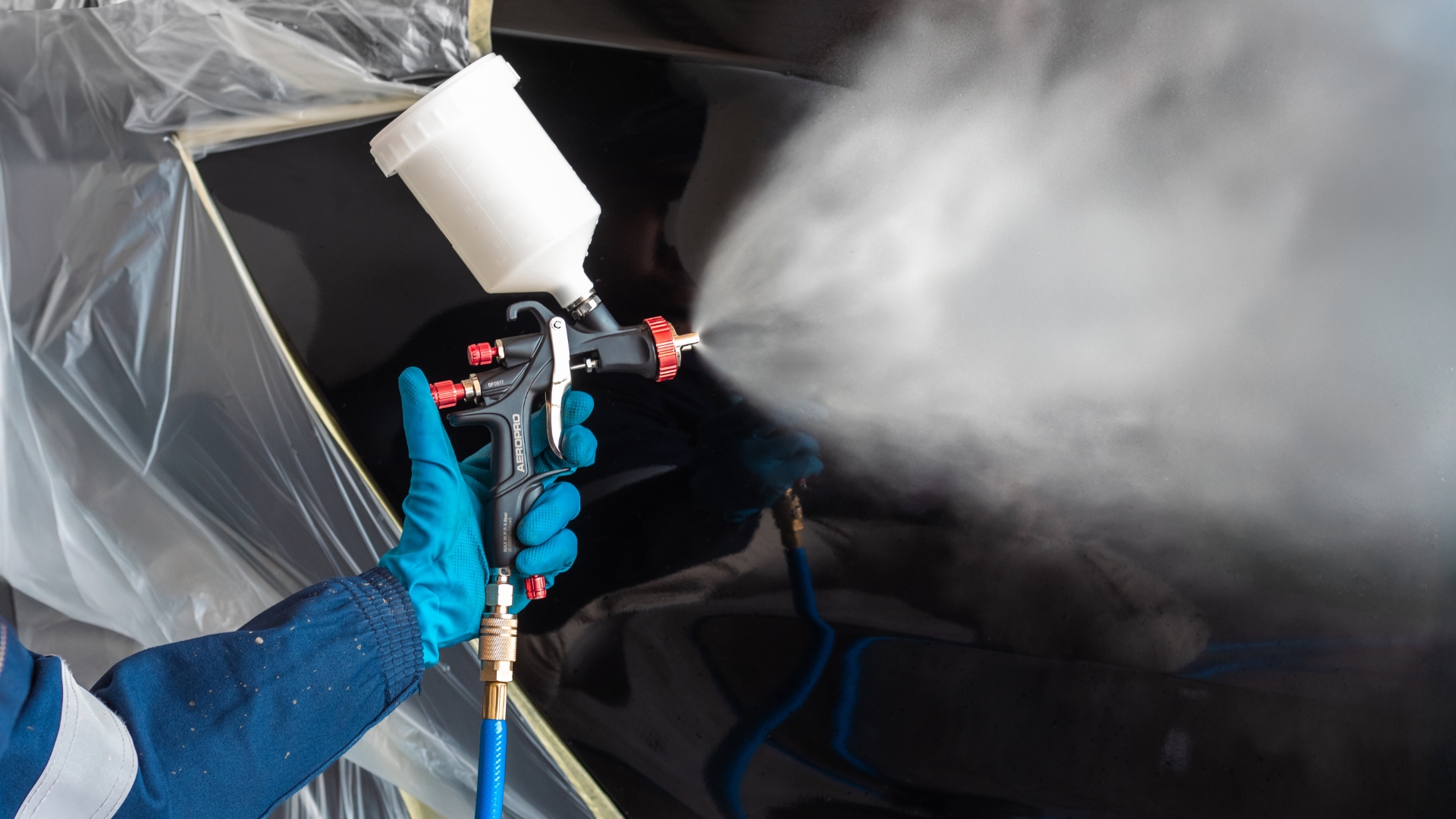
HVLP spray guns are efficient but unforgiving. They need high airflow, lower pressure at the gun, and stable delivery.
Correct basic setup: compressor set slightly above required pressure, regulator near the gun, and moisture trap before the hose.
Running an HVLP gun on an undersized compressor leads to poor atomisation and inconsistent fan patterns. Always size the compressor for airflow first, then regulate pressure at the gun.
Painting and DIY Takeaway
For painting and finishing work, airflow consistency matters more than pressure, tank size stabilises results, moisture control protects the finish, and compressor limits must be respected. Most failed paint jobs are caused by inadequate air supply, not poor technique.
Accessories and System Setup
Many compressor complaints aren't caused by the compressor itself, but by poor system setup and restrictive accessories.
Do You Need an Air Dryer or Moisture Trap?
Every air compressor produces moisture. The question is how much control you need.
Moisture traps remove liquid water from compressed air as it exits the tank. They're best for home garages, DIY use, intermittent spraying, and general air tools . A basic moisture trap is the minimum requirement for any compressor used for painting or air tools .
Air dryers actively reduce moisture content beyond what a trap can remove. They're recommended when spray painting regularly, running sensitive pneumatic tools, or operating in humid coastal or summer rainfall areas.
For most small workshops, a moisture trap plus disciplined tank draining is sufficient. Full air dryers are typically justified in professional paint or production environments.
Best Air Hoses and Fittings for High-Flow Tools
Hoses and fittings directly affect airflow.
Common mistake: using thin hoses and cheap couplers with high-demand tools. This causes pressure drop, weak tool performance, and excessive compressor cycling.
What to look for: larger internal hose diameter for high-flow tools, smooth bore hoses, and quality fittings with minimal restriction.
Impact wrenches, sanders and spray guns benefit immediately from better hoses, even without upgrading the compressor. Airflow restrictions downstream waste compressor capacity you've already paid for.
Best Air Hoses and Fittings for High-Flow Tools
Hoses and fittings directly affect airflow.
Common mistake
Using thin hoses and cheap couplers with high-demand tools.
This causes
- pressure drop
- weak tool performance
- excessive compressor cycling
What to look for
- Larger internal hose diameter for high-flow tools
- Smooth bore hoses
- Quality fittings with minimal restriction
Impact wrenches, sanders and spray guns benefit immediately from better hoses, even without upgrading the compressor.
Airflow restrictions downstream waste compressor capacity you have already paid for.
How to Set Up an Air Compressor System in a Workshop
A proper setup improves efficiency and extends compressor life.
Basic workshop layout principles
- Compressor placed in a well-ventilated area
- Short, direct hose runs
- Moisture trap installed close to the outlet
- Regulator positioned near the work area
Larger workshop considerations
- Fixed piping instead of long hoses
- Drop points for multiple workstations
- Drain points at low sections of piping
Even simple planning prevents moisture buildup, pressure loss and unnecessary wear.
Why Quick-Couplers Reduce Tool Performance
Quick-couplers are convenient, but not all are equal.
The hidden problem
Many standard couplers have narrow internal passages.
This restriction limits airflow, especially for
- spray guns
- die grinders
- sandblasters
The result
- Tools feel underpowered
- Compressor runs continuously
- Pressure drops under load
High-flow couplers reduce restriction and allow tools to operate closer to their designed performance.
This is one of the easiest upgrades with immediate results.
Regulator vs Filter vs Lubricator
What Each One Does
These components are often confused but serve different purposes.
| Component | Primary Function | Used For | Important Notes |
|---|---|---|---|
| Regulator | Controls air pressure delivered to the tool |
Spray painting air tools with pressure limits |
Prevents over-pressurising sensitive tools |
| Filter | Removes water and contaminants from compressed air |
Painting Tool longevity Clean operation |
Essential for paint quality and internal tool protection |
| Lubricator | Adds oil mist to the air supply | Pneumatic tools requiring lubrication | Never use on air lines feeding spray guns or painting equipment |
Swipe to see full table →
Correct placement and understanding prevent costly mistakes and damaged finishes.
How Long Can an Air Compressor Run Continuously?
There is no universal time limit. It depends on design and workload.
Factors that limit runtime
- Compressor airflow vs tool demand
- Tank size
- Cooling and ventilation
- Ambient temperature
Warning signs of overuse
- Compressor never switches off
- Excessive heat
- Pressure never reaches cutoff
Compressors are designed to cycle. Continuous running indicates the system is undersized or restricted.
Reducing restrictions, increasing storage or upgrading airflow capacity solves most continuous run issues.
Accessories are not optional extras. They are part of the compressor system.
- Moisture control protects finishes
- high-flow hoses protect performance
- proper layout protects longevity
A correctly set up air system allows even modest compressors to perform reliably, quietly and efficiently in real-world South African conditions.
Air Compressor Comparison and Decision-Making Guide for South Africa
This section helps buyers compare common compressor options clearly, avoid first-time mistakes, and understand what they are actually paying for.
It is written for South African home users, workshops and small businesses using MAC AFRIC compressors supplied by Adendorff Machinery Mart, based on real specifications and real-world performance.
50 L vs 100 L vs 200 L Compressors Compared
Tank size is one of the most misunderstood buying decisions.
50 L compressors
Best suited for
- Tyre inflation
- Cleaning and blowing
- Light DIY tools
- Short spray bursts
Strengths
- Compact
- Lower power draw
- Easy to move
Limitations
- Limited air reserve
- Frequent cycling
- Not suitable for sustained spraying or sanding
A 50 L compressor reaches pressure quickly but empties just as fast.
100 L compressors
Often the most versatile choice.
Best suited for
- Home garages
- Spray painting small to medium jobs
- Impact wrenches
- General workshop use
Strengths
- Stable airflow
- Reduced cycling
- Compatible with more tools
Limitations
- Larger footprint
- Still limited for multi-user setups
For many users, 100 L is the point where compressors start feeling capable rather than restrictive.
200 L compressors
Designed for regular or business use.
Best suited for
- Continuous tool operation
- Spray painting and panel work
- Small workshops
Strengths
- Large air buffer
- Smoother pressure delivery
- Less motor strain
Limitations
- Space requirements
- Higher power demands
- Overkill for casual users
Bigger tanks do not create more air, but they make air delivery far more consistent.
Why Bigger Isn’t Always Better With Air Compressors
Many buyers assume the biggest compressor is the safest choice.
This is not always true.
When bigger causes problems
- Limited space or ventilation
- Insufficient electrical supply
- Long idle periods leading to condensation
- Higher cost with no real benefit
A large compressor running occasionally can suffer more moisture buildup than a correctly sized smaller unit used regularly.
Correct sizing means matching the compressor to the actual workload, not future guesses.
Silent Compressors vs Standard Compressors
Are They Worth It?
| Feature | Silent oil free Compressors | Standard Compressors |
|---|---|---|
| Design Purpose | Designed for noise-sensitive environments | Typically oil-lubricated and belt driven |
| Best For |
Indoor DIY Woodworking Airbrushing Home garages near living spaces |
Workshops Spray painting Pneumatic tools |
| Advantages |
Low noise levels Clean air Minimal maintenance |
Higher airflow Better heat management Longer continuous runtime |
| Trade-Offs |
Lower sustained airflow Limited duty cycle |
Louder operation Requires basic maintenance |
Swipe to see full table →
Silent compressors are worth it when noise matters more than airflow. They are not replacements for workshop-duty machines.
Cheap vs Professional Air Compressors
What You’re Paying For
Price differences usually reflect engineering, not branding.
Entry-level compressors
You pay for
- Basic functionality
- Light materials
- Intermittent use capability
Suitable for occasional tasks but not sustained workloads.
Professional-grade compressors
You pay for
- Heavier pump components
- Better cooling
- Higher airflow consistency
- Longer service life
These compressors cost more upfront but last significantly longer when used regularly.
Replacing undersized compressors repeatedly costs more than buying correctly once.
Top Mistakes First-Time Compressor Buyers Make
- Choosing by horsepower alone
- Ignoring airflow requirements
- Underestimating tank size
- Forgetting moisture control
- Buying for “just in case”
Most compressor dissatisfaction comes from misunderstanding, not product failure.
Good compressor choices are deliberate, not defensive.
- Tank size stabilises airflow
- CFM determines tool compatibility
- noise level determines environment suitability
- and power supply sets hard limits
When buyers understand these fundamentals, compressor selection becomes simple, predictable and cost-effective in real South African conditions.
Air Compressor – Frequently Asked Questions
Can an air compressor run overnight?
No. Air compressors should not run unattended overnight due to heat buildup, moisture accumulation, and the risk of air leaks.
How much electricity does an air compressor use in South Africa?
It depends on the motor size and load. Most single-phase workshop compressors use between 1.5 kW and 2.2 kW and consume more electricity at startup.
Is an oil free compressor good enough for spray painting?
Yes, for light spray work. For high-quality or continuous painting, an oil-lubricated model is better.
How loud is a compressor really?
Noise is measured in dB. A compressor rated at 90 dB is significantly louder than one at 70 dB. Always check dB ratings when selecting a unit.
What happens if a compressor is too small?
An undersized compressor won’t meet tool demand, will cycle excessively, and can fail prematurely.
What size air compressor do I need for my tools?
Base your choice on the highest CFM requirement tool you use. Add a 30% buffer for best performance.
What is the difference between belt drive and direct drive compressors?
Belt drive units are quieter and longer-lasting. Direct drive units are compact, low-maintenance and better for portable tasks.
How often must I drain an air compressor?
Daily for frequent use. Regular draining prevents rust and moisture damage in the tank and air lines.
Can I leave my compressor plugged in?
Not recommended. It can restart unexpectedly and build pressure if leaks occur.
What oil do I use in my air compressor?
Use non-detergent SAE 30 or dedicated compressor oil. Always refer to your MAC AFRIC compressors manual for exact specifications.
Why is there water coming from my air line?
This is normal condensation. Use an inline moisture trap or drain the tank frequently.
Can a compressor run on a generator?
Yes, if the generator has enough capacity to handle the compressor’s surge startup power. Choose a generator with excess output for safety.
Where can I shop for MAC AFRIC compressors
Visit the Adendorff Compressor Range to view all available models and specs.