MAC AFRIC Mini Dumper Troubleshooting Guide
MAC AFRIC 6.5HP Gasoline Mini Dumper Complete Troubleshooting Guide
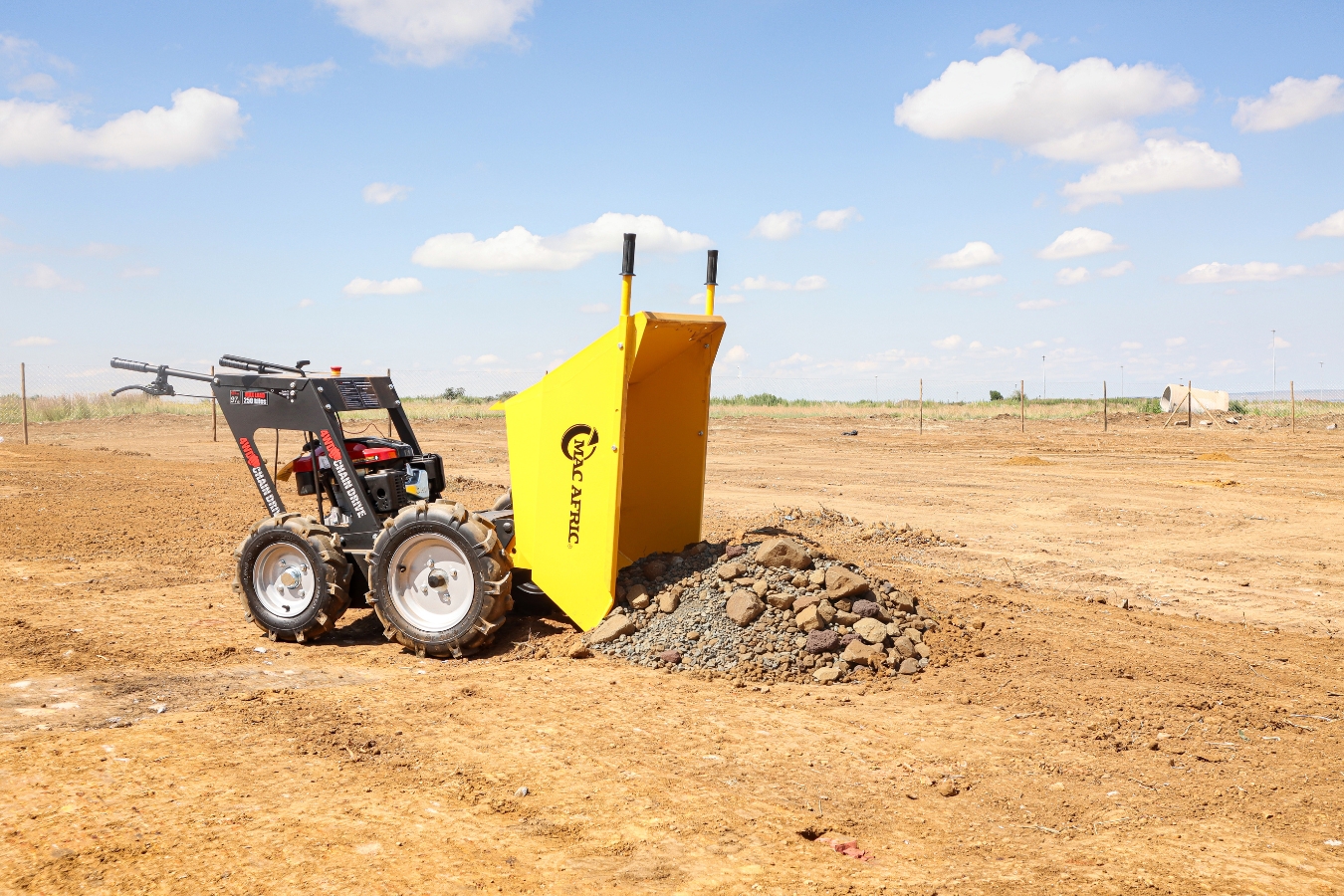
The MAC AFRIC MDUMPT025 is a 6.5HP gasoline mini dumper designed for professional and heavy-duty home use. With a 250-300kg load capacity and 4-wheel chain/gear drive, this machine handles tough terrain and demanding jobs. This comprehensive troubleshooting guide helps you diagnose and fix common issues, maintain peak performance, and maximize the life of your equipment.
Model Specifications
Engine: 6.5HP (196cc) Gasoline
Load Capacity: 250-300kg
Drive: 4-Wheel Chain/Gear Drive
Transmission: 3-4 Forward, 1 Reverse
Mini Dumper Safety First
Critical Safety Requirements
Before troubleshooting:
- Park on level ground
- Apply parking brake
- Switch engine off
- Allow engine to cool (15+ minutes)
- Ensure load bin empty and secured
- Never work under raised bin without support
- Keep hands clear of moving parts
During operation:
- Maximum load 300kg - never exceed
- No passengers - operator only
- Wear steel-toed boots, gloves, high-vis vest
- Keep feet clear of tracks/wheels
- Maintain 3-point contact when mounting/dismounting
Mini Dumper Engine Problems
Mini Dumper Engine Won't Start
Symptom: Pull cord or recoil starter doesn't start engine, no ignition
Probable Causes:
1. Fuel system issues
- Empty fuel tank
- Stale fuel (over 30 days old)
- Fuel valve closed
- Clogged fuel filter
- Blocked fuel line
2. Ignition problems
- Spark plug fouled/worn
- Spark plug wire disconnected
- Ignition switch off
- Kill switch activated
3. Engine issues
- Low engine oil (safety cutoff)
- Flooded engine
- Choke position incorrect
- Air filter completely blocked
Solutions
- Check fuel level - refuel if low
- Verify fuel valve OPEN position
- Replace fuel if over 30 days old
- Check engine oil level - top up to mark
- Set choke to FULL for cold start
- Ensure kill switch in RUN position
- Remove and inspect spark plug - gap should be 0.7-0.8mm, replace if fouled, cracked, or worn
- Clean/replace air filter if very dirty
- If flooded: remove plug, pull cord 5 times, replace plug, try again
- Check fuel reaching carburetor (loosen drain screw briefly)
Mini Dumper Engine Starts Then Dies
Symptom: Engine runs for few seconds then stops, won't stay running
Probable Causes:
1. Fuel delivery
- Vapor lock in fuel tank
- Dirty carburetor
- Fuel cap vent blocked
- Water in fuel
2. Air/fuel mixture
- Choke left on after warming
- Air leak in intake
- Carburetor adjustment incorrect
3. Ignition timing
- Weak spark
- Timing out of adjustment
- Magneto issues
Solutions
- Loosen fuel cap slightly - if engine runs better, vent is blocked
- Clean fuel cap vent hole with fine wire
- Drain and replace fuel if water suspected
- Move choke to OFF once engine warm
- Clean carburetor jets and passages
- Check all intake gaskets for air leaks
- Test spark plug under load (should be strong blue spark)
- Professional carburetor service if problems persist
Engine Lacks Power
Symptom: Engine runs but weak, struggles under load, won't maintain RPM
Probable Causes:
1. Restricted airflow
- Clogged air filter
- Exhaust blocked
- Engine overheating
2. Fuel issues
- Partially blocked fuel filter
- Weak fuel pump (if equipped)
- Carburetor needs cleaning
- Low-quality fuel
3. Engine wear
- Low compression
- Valve clearance incorrect
- Worn piston rings
- Carbon buildup
Solutions
- Clean or replace air filter
- Check exhaust for blockages (mud, debris)
- Ensure cooling fins clean
- Replace fuel filter
- Use fresh 95 octane petrol minimum
- Clean carburetor thoroughly
- Check compression (should be 90+ PSI)
- Adjust valve clearance (professional service)
- Decarbonize cylinder head if needed
Engine Overheating
Symptom: Engine running very hot, smell of overheating, loss of power
Probable Causes:
1. Cooling issues
- Cooling fins blocked with debris
- Oil level too low
- Wrong oil grade
- Shroud/cowling damaged
2. Engine problems
- Lean fuel mixture
- Wrong spark plug
- Timing advanced
- Heavy load continuous operation
3. Operating conditions
- Ambient temperature very high
- Operating on steep slopes continuously
- Overloading dumper
Solutions
- Stop immediately and allow cooling
- Clean cooling fins with brush
- Check oil level - top up with SAE 10W-30
- Verify shroud properly fitted
- Don't overload beyond 300kg
- Take breaks on long/steep runs
- Check carburetor mixture adjustment
- Use correct spark plug specification
- Reduce continuous high-load operation
Excessive Smoke
Symptom: Blue, white, or black smoke from exhaust
| Smoke Color | Cause | Fix |
|---|---|---|
| Blue Smoke (Oil Burning) |
Overfilled oil, worn piston rings, valve guide wear, oil in air filter | Check oil level, drain excess, replace rings if needed |
| White Smoke (Water/Coolant) |
Condensation (normal on cold start), head gasket failure, cracked cylinder head | Normal if stops after warm-up, otherwise professional repair needed |
| Black Smoke (Rich Mixture) |
Choke left on, dirty air filter, carburetor flooding | Open choke, clean/replace air filter, service carburetor |
Swipe to see full table →
Engine Runs Rough/Misfiring
Symptom: Uneven running, backfiring, hunting RPM
Probable Causes:
- Incorrect spark plug gap
- Partially blocked carburetor jet
- Air leak at intake gasket
- Valve clearance too tight
- Bad fuel
Solutions
- Clean/gap spark plug correctly
- Clean carburetor main jet
- Replace intake gasket if damaged
- Fresh fuel only
- Professional valve adjustment if needed
Transmission & Drive Problems
Won't Move When in Gear
Symptom: Engine runs, gear selected, but dumper doesn't move
Probable Causes:
1. Clutch issues
- Clutch not engaging
- Clutch cable broken
- Clutch plates worn
- Adjustment incorrect
2. Transmission problems
- Gear not fully engaged
- Shift linkage disconnected
- Low transmission oil
- Broken drive belt (belt-drive models)
3. Drive system
- Broken chain (chain-drive models)
- Seized axle bearing
- Shear pin broken (if equipped)
- Wheel hub failure
Solutions
- Check clutch cable connected and adjusted
- Verify clutch lever moves freely
- Ensure gear fully engaged (positive shift)
- Check transmission oil level (varies by model)
- Inspect drive chain for breakage
- Check drive belt condition and tension
- Verify wheels turn freely by hand (engine off)
- Listen for grinding/scraping noises
- Professional assessment if internal damage suspected
Difficulty Changing Gears
Symptom: Gears won't shift, grinding noise, transmission stuck
Probable Causes:
1. Clutch not disengaging
- Cable needs adjustment
- Clutch dragging
- Shift moving while trying to change
2. Shift linkage
- Bent shift rod
- Worn bushings
- Detent mechanism faulty
3. Transmission wear
- Worn shift forks
- Damaged gear teeth
- Seized shift shaft
Solutions
- Stop completely before changing gear
- Adjust clutch cable for full disengagement
- Lubricate shift linkage
- Check shift lever returns to neutral easily
- Inspect shift rod for bends
- Don't force gears - if stuck, rock dumper slightly
- Professional transmission service if internal issues
Jerky Movement / Clutch Slipping
Symptom: Dumper moves erratically, clutch slips under load, juddering
Probable Causes:
- Clutch plates worn or glazed
- Oil on clutch plates
- Clutch springs weak
- Cable adjustment wrong
- Clutch basket worn
Solutions
- Adjust clutch cable free play (typically 2-5mm)
- Check for oil leaks onto clutch
- Replace clutch plates if worn
- Clean glazed plates with emery cloth
- Replace worn springs
- Professional clutch overhaul may be needed
Loss of Drive Power
Symptom: Engine revs but slow movement, reduced pulling power
Probable Causes:
- Slipping clutch
- Loose drive chain
- Worn chain/sprockets
- Low transmission oil
- Seized bearings creating drag
Solutions
- Adjust clutch properly
- Check chain tension - should have 10-20mm play
- Tighten chain adjustment bolts
- Inspect chain for wear (stretched, stiff links)
- Replace worn sprockets (hooked teeth)
- Top up transmission oil
- Lubricate chain regularly
- Check wheel bearings for excessive play
Hydraulic Dump System Problems
Bin Won't Lift
Symptom: Hydraulic dump won't raise bin, stays down, weak lifting
Probable Causes:
1. Hydraulic fluid issues
- Low hydraulic fluid
- Air in system
- Contaminated fluid
- Blocked filter
2. Hydraulic components
- Pump failure
- Blown hydraulic hose
- Cylinder seals leaking
- Relief valve stuck open
3. Control system
- Control valve faulty
- Electrical issue (powered systems)
- Linkage disconnected
Solutions
- Check hydraulic fluid reservoir - top up with correct fluid
- Inspect hoses for leaks or damage
- Look for fluid puddles under unit
- Bleed air from system (procedure in manual)
- Check pump drive belt/coupling intact
- Test control valve operation
- Listen for pump running (if electric/hydraulic)
- Professional hydraulic service if pump/cylinder failed
Bin Won't Stay Up
Symptom: Bin lifts but drops slowly, won't hold position
Probable Causes:
- Cylinder seal leaking internally
- Control valve leaking
- Hydraulic hose weeping
- Safety prop not engaged (manual systems)
Solutions
- Engage safety lock/prop before working near raised bin
- Check cylinder rod for scoring
- Inspect all hoses for seepage
- Test control valve holds pressure
- Replace leaking seals or cylinder
- Never work under bin without mechanical support
Bin Lifts Too Slowly
Symptom: Bin takes very long time to rise, sluggish operation
Probable Causes:
- Low hydraulic fluid
- Worn hydraulic pump
- Restricted flow (filter, hose)
- Cold hydraulic fluid
- Engine RPM too low
Solutions
- Check fluid level - top up
- Warm up system (cycle few times)
- Replace hydraulic filter if equipped
- Ensure engine at operating RPM
- Check pump pressure (requires gauge)
- Professional pump rebuild if worn
Manual Dump Mechanism Issues
Symptom: Manual tip handle hard to operate, won't release
Probable Causes:
- Pivot points dry/seized
- Latch mechanism dirty
- Bent operating rod
- Spring failure
Solutions
- Lubricate all pivot points with grease
- Clean latch mechanism
- Check springs intact
- Straighten or replace bent rods
- Empty bin if overloaded
- Check bin not caught on debris
Steering & Control Problems
Hard to Steer
Symptom: Requires excessive force to turn, poor maneuverability
Probable Causes:
1. Brake drag
- Parking brake partially engaged
- Brake shoes dragging
- Brake cable seized
2. Tire/track issues
- Tire pressure incorrect
- Wheel bearings tight
- Track tension too high
- Debris in tracks
3. Steering mechanism
- Dry linkage
- Bent steering rod
- Worn bushings
Solutions
- Release parking brake fully
- Check tire pressures (typically 30 PSI)
- Lubricate steering linkage
- Adjust brake cables
- Clean debris from tracks
- Check track tension (adjust if too tight)
- Inspect wheel bearings for damage
- Replace worn steering bushings
Dumper Pulls to One Side
Symptom: Won't track straight, veers left or right
Probable Causes:
- Uneven tire pressure
- Brake dragging one side
- Track tension uneven (tracked models)
- Bent axle
- Load positioned off-center
Solutions
- Equalize tire pressures
- Check brakes release equally both sides
- Adjust track tension evenly
- Center load in bin
- Inspect frame for damage/bending
- Professional alignment if axle bent
Brakes Not Working
Symptom: Poor stopping, brake lever/pedal spongy, no braking effect
Probable Causes:
- Brake cable stretched/broken
- Brake shoes worn out
- Oil/grease on brake surfaces
- Adjustment needed
- Brake return springs broken
Solutions
- Adjust brake cable tension
- Inspect brake shoes - replace if worn below 3mm
- Clean brake drums if oily
- Check cables for fraying
- Replace broken return springs
- Ensure brake lever returns to off position
- Professional brake overhaul if severely worn
Track/Wheel Problems
Track Keeps Coming Off (Tracked Models)
Symptom: Track derails frequently, won't stay on rollers
Probable Causes:
- Track tension too loose
- Worn track
- Damaged rollers or sprockets
- Track misaligned
- Debris buildup
Solutions
- Adjust track tension properly
- Clean mud/debris from tracks
- Inspect track for damage (cuts, missing cleats)
- Check sprocket teeth not worn
- Verify idler wheels rotate freely
- Replace track if severely worn
- Professional alignment if repeated derailment
Excessive Vibration
Symptom: Dumper shakes violently, rough ride, loose components
Probable Causes:
- Unbalanced load
- Flat spots on tires
- Bent wheels
- Loose engine mounts
- Damaged tracks
- Worn bearings
Solutions
- Distribute load evenly in bin
- Check tire condition - replace if damaged
- Inspect wheels for bends
- Tighten all mounting bolts
- Check engine mount bolts
- Replace worn wheel bearings
- Balance wheels if possible
- Reduce speed on rough terrain
Wheels Not Turning Freely
Symptom: Excessive drag, wheel resistance, noise
Probable Causes:
- Seized bearings
- Brake dragging
- Bent axle
- Debris in wheel hub
- Over-tightened wheel nuts
Solutions
- Check wheel nuts correct torque (not over-tight)
- Inspect bearings - should be smooth
- Clean and re-grease bearings
- Verify brake fully released
- Remove debris from wheel area
- Replace seized bearings
- Check axle straightness
Load Bin Problems
Bin Won't Lock Down
Symptom: Bin rattles, won't secure in transport position
Probable Causes:
- Latch mechanism worn
- Latch cable broken
- Striker plate bent
- Spring missing or weak
Solutions
- Adjust latch mechanism
- Lubricate latch pivot points
- Straighten striker plate
- Replace worn components
- Check latch spring intact
- Tighten all fasteners
Bin Leaking Material
Symptom: Material escaping from bin, tailgate not sealing
Probable Causes:
- Tailgate latch not closing
- Rubber seals worn
- Bin floor rusted through
- Tailgate bent or damaged
Solutions
- Adjust tailgate latch
- Replace worn rubber seals
- Patch rust holes (weld or plate)
- Straighten tailgate if bent
- Check hinge pins tight
- Don't overload
Bin Damaged or Bent
Symptom: Bin shape deformed, won't tip properly
Probable Causes:
- Overloading
- Dropping bin hard
- Impact damage
- Corrosion weakening structure
Solutions
- Never exceed 300kg capacity
- Lower bin gently
- Straighten minor bends (heat may be needed)
- Weld cracks immediately
- Reinforce weak areas
- Replace bin if severely damaged
Electrical Problems (If Equipped)
Battery Won't Charge
Symptom: Battery always dead, won't hold charge, no electric start
Probable Causes:
- Charging system faulty
- Loose connections
- Bad battery
- Blown fuse
Solutions
- Check battery terminals clean and tight
- Test battery voltage (should be 12.6V minimum)
- Check charging system output (13.5-14.5V running)
- Replace battery if more than 3 years old
- Check fuses
- Professional electrical diagnosis
Lights Not Working
Symptom: Work lights or indicators not functioning
Probable Causes:
- Blown bulb
- Bad connection
- Switch faulty
- Fuse blown
- Wiring damaged
Solutions
- Replace bulbs
- Check all connections tight
- Test switches
- Replace fuses
- Inspect wiring for damage
- Check earth connections
Operating Problems
Poor Hill Climbing
Symptom: Dumper struggles on slopes, stalls, loses power
Probable Causes:
- Overloaded
- Low engine power
- Clutch slipping
- Wrong gear selected
- Tires slipping
Solutions
- Reduce load
- Use lower gear
- Check engine performance
- Adjust clutch
- Improve tire traction (better tread)
- Avoid slopes over 15° when loaded
- Distribute weight forward on uphill
Dumper Unstable
Symptom: Tips easily, feels unsafe, wants to roll over
Probable Causes:
- Overloaded
- Load too high in bin
- Operating on excessive slope
- Load shifted to one side
- Bin raised while moving
Solutions
- Never exceed 300kg capacity
- Keep load level low in bin
- Avoid side slopes
- Center load properly
- Never drive with bin raised
- Reduce speed on slopes
- Lower center of gravity
Excessive Fuel Consumption
Symptom: Using too much petrol, short run time per tank
Probable Causes:
- Air filter dirty
- Rich carburetor mixture
- Heavy loads constantly
- Low tire pressure
- Engine not tuned
Solutions
- Clean air filter
- Professional carburetor tune
- Inflate tires correctly
- Avoid continuous heavy loads
- Regular engine service
- Check for fuel leaks
Maintenance Schedule
| Frequency | Maintenance Tasks |
|---|---|
| Daily (Before Each Use) |
Check engine oil level Inspect for fuel leaks Check tire pressure/track tension Test brakes function Inspect load bin for damage Check all controls operate smoothly Remove debris from unit Verify all guards in place |
| Weekly (Or Every 10 Hours) |
Clean air filter (more often in dusty conditions) Check fuel filter Lubricate chain drive Inspect all cables Check hydraulic fluid level Tighten all fasteners Inspect tires/tracks for wear Clean cooling fins Check spark plug condition |
| Monthly (Or Every 50 Hours) |
Change engine oil Replace air filter if damaged Service carburetor Check valve clearances Inspect brake shoes Grease all pivot points Check belt/chain tension Inspect hydraulic hoses Clean entire unit thoroughly |
| Every 100 Hours Annually |
Replace spark plug Change transmission oil Replace fuel filter Full hydraulic system check Professional engine tune-up Bearing inspection/repack Complete brake service Check frame for cracks Replace worn cables Electrical system check |
Swipe to see full table →
Fuel System Maintenance
Proper Fuel Management
Fuel Requirements:
- Use 95 octane unleaded petrol minimum
- Never use fuel over 30 days old
- Add fuel stabilizer if storing over 2 weeks
- Keep fuel tank 90% full when storing (prevents condensation)
- Never use E85 or high-ethanol fuels
Fuel System Care:
- Replace fuel every season start
- Drain carburetor when storing
- Keep fuel clean (use fuel filter)
- Don't store fuel in direct sunlight
- Clean fuel tank annually
Storage Procedures
Short-Term Storage (1-4 Weeks)
- Park under cover
- Apply parking brake
- Empty load bin
- Fill fuel tank 90% full
- Clean unit thoroughly
- Cover with tarp
Long-Term Storage (Over 1 Month)
- Clean unit completely
- Run engine until warm
- Add fuel stabilizer
- Change engine oil while warm
- Drain carburetor bowl
- Remove spark plug, add oil to cylinder (tablespoon)
- Pull starter cord slowly 2-3 times
- Reinstall spark plug
- Inflate tires to max pressure
- Disconnect battery (if equipped)
- Cover completely
- Store in dry location
- Block up to remove weight from tires (ideal)
Returning to Service After Storage
- Inspect all fluids
- Check tire pressures
- Reconnect battery
- Check fuel condition
- Test all controls
- Check for rodent damage
- Start and warm up engine
- Test all functions before loading
Common Error Patterns
"Dumper Was Working Fine Yesterday"
Sudden failures often caused by:
- Ran out of fuel
- Spark plug fouled
- Kill switch accidentally activated
- Cable broke/disconnected
- Low engine oil triggered cutoff
- Fuse blown (electrical models)
"It Only Does It Sometimes"
Intermittent problems usually:
- Loose electrical connection
- Stale fuel
- Carburetor needs cleaning
- Faulty ignition switch
- Clutch adjustment borderline
"Makes a Funny Noise"
| Noise Type | Likely Cause |
|---|---|
| Clicking | Low oil, valve clearance, drive chain loose |
| Grinding | Bearings worn, gears damaged, brake dragging |
| Knocking | Low oil, worn crank, carbon buildup |
| Squealing | Belt slipping, bearing failure, brake dragging |
| Rattling | Loose components, worn chain, exhaust loose |
Swipe to see full table →
Emergency Procedures
Engine Fire
Actions
- Turn off fuel valve immediately
- Use extinguisher (not water)
- Allow complete cool-down
- Inspect fuel system thoroughly
- Professional inspection before restart
- Common causes: fuel leak, overheating
Brake Failure
Actions
- Release throttle immediately
- Shift to lowest gear for engine braking
- Turn away from hazards
- Use terrain to slow (uphill if possible)
- Jump clear if rollover imminent
- Never operate without working brakes
Hydraulic Failure While Raised
Actions
- Keep clear of bin
- Don't attempt to lower manually
- Support bin with mechanical prop
- Reduce load if possible
- Professional hydraulic repair needed
- Never work under unsupported raised bin
Stuck on Slope
Actions
- Set parking brake
- Don't abandon if unstable
- Use rocks/wood to chock wheels
- Carefully reverse if safe
- Get assistance for recovery
- Don't attempt beyond machine capability
Quick Reference: Common Problems
| Problem | First Check | Quick Fix |
|---|---|---|
| Won't start | Fuel and oil level | Refuel, check choke, clean spark plug |
| Weak power | Air filter | Clean/replace filter |
| Won't move | Clutch cable | Adjust cable, check transmission oil |
| Hard to steer | Tire pressure | Inflate tires, lubricate linkage |
| Bin won't lift | Hydraulic fluid | Top up fluid, check hoses |
| Pulls one side | Tire pressure | Equalize pressure both sides |
| Excessive smoke | Oil level | Check oil level, clean air filter |
| Gears won't shift | Clutch | Adjust clutch, stop before shifting |
| Track comes off | Track tension | Adjust tension, clean tracks |
| Brakes poor | Brake adjustment | Adjust cables, inspect shoes |
Swipe to see full table →
Parts & Consumables
Regular Replacement Items
| Item | Replacement Interval |
|---|---|
| Engine oil (SAE 10W-30) | Every 50 hours |
| Air filter | Every 100 hours or when dirty |
| Spark plug | Every 100 hours |
| Fuel filter | Every season |
| Transmission oil | Every 100 hours |
| Hydraulic fluid | Check regularly, change annually |
| Drive chain | Inspect every 50 hours |
| Brake shoes | As needed (below 3mm) |
| Clutch plates | As needed (when slipping) |
Swipe to see full table →
Available from Adendorff
- Engine parts and filters
- Drive chains and sprockets
- Hydraulic components
- Brake assemblies
- Cables and controls
- Tires and tracks
When to Seek Professional Service
Immediate Service Required
- Hydraulic system failure
- Transmission failure
- Engine won't start after basic checks
- Brake failure
- Frame damage
- Fire damage
- Major collision
Service Recommended
- Annual comprehensive service
- Engine lacks power after basic fixes
- Excessive vibration
- Hydraulic leaks
- Clutch replacement needed
- Track/wheel bearing replacement
- Carburetor rebuild
Need Expert Support?
Contact: Adendorff Machinery Mart
National Call Centre: 011 434 7000
Website: www.adendorff.co.za
Operator Best Practices
For Long Machine Life
- Never exceed 300kg load capacity
- Warm up engine before heavy work
- Change oil regularly (most important)
- Keep unit clean
- Lubricate moving parts
- Store properly in off-season
- Fix small problems before they become big
- Use quality fuel and oil
- Operate smoothly - no jerking or slamming
- Follow maintenance schedule religiously
Operating Tips
- Test all functions before loading
- Distribute load evenly
- Empty bin completely after each use
- Clean after use in mud/water
- Lower bin before driving
- Use correct gear for terrain
- Plan route before moving with load
- Take breaks on long hauls
- Never leave running unattended
- Secure when parked
Safety Reminders
- No passengers ever
- Stay seated when moving
- Keep hands/feet inside at all times
- Never bypass safety devices
- Maintain safe distance from edges
- Use spotters on busy sites
- Wear proper PPE
- Know your escape routes
- Inspect before every use
- Stop immediately if something wrong
"An ounce of prevention is worth a pound of cure. Daily checks prevent weekly breakdowns."
The MAC AFRIC MDUMPT025 is essentially a motorized wheelbarrow - it does the heavy pushing for you. Instead of straining to move 300kg of gravel uphill by hand, you simply drive it where you need it to go. Perfect for construction sites, farms, landscaping projects, and any job where you need to move bulk materials efficiently without the physical strain of manual hauling.
This guide covers common issues with 6.5HP gasoline mini dumpers. Always refer to your owner's manual for model-specific information. When in doubt, contact Adendorff technical support - fixing it right the first time saves time and money.