Beginners Guide to Buying a Welder
Beginner’s Guide to Buying a Welder
Starting Your Welding Journey
Getting into welding opens the door to countless possibilities – from fixing gates and trailers to building custom furniture, car parts, or outdoor projects. But for a beginner, choosing the right welder can feel overwhelming. Should you go for MIG, TIG, or Stick? What do inverter and transformer mean? This guide breaks it down simply, showing you which welder suits which type of project, what features actually matter, and how to get started safely with MAC AFRIC machines from Adendorff Machinery Mart.
MIG vs TIG vs Stick – Which Is Right for You?
MIG Welding (Metal Inert Gas)
MIG is the easiest process for most beginners. You pull the trigger, and wire automatically feeds through the torch like a “hot glue gun for metal.” It’s fast, clean, and ideal for projects where you want neat welds with minimal cleanup.
Best For:
- Car bodywork and exhaust repairs
- Building tables, shelves, or metal frames
- General household and DIY projects
Recommended:
- MAC AFRIC MIG 195 Compact: Perfect entry-level MIG for learning gas and flux-core welding.
- MAC AFRIC 160A MIG/MMA Inverter: Lighter, digital, and more adjustable for cleaner control.
Stick Welding (MMA / Arc)
Stick welding uses a coated electrode (“rod”) that melts and fuses metal while producing a gas shield and slag layer. It’s tougher to learn than MIG, but it’s inexpensive, portable, and great for outdoor jobs or thicker steel.
Best For:
- Farm repairs and heavy-duty gates
- Welding outdoors or in windy conditions
- Construction and maintenance work
Recommended:
- MAC AFRIC 190A MMA Inverter Welder: Compact, 6.3 kg, with arc-force and hot-start features. Great for beginners working outside the workshop.
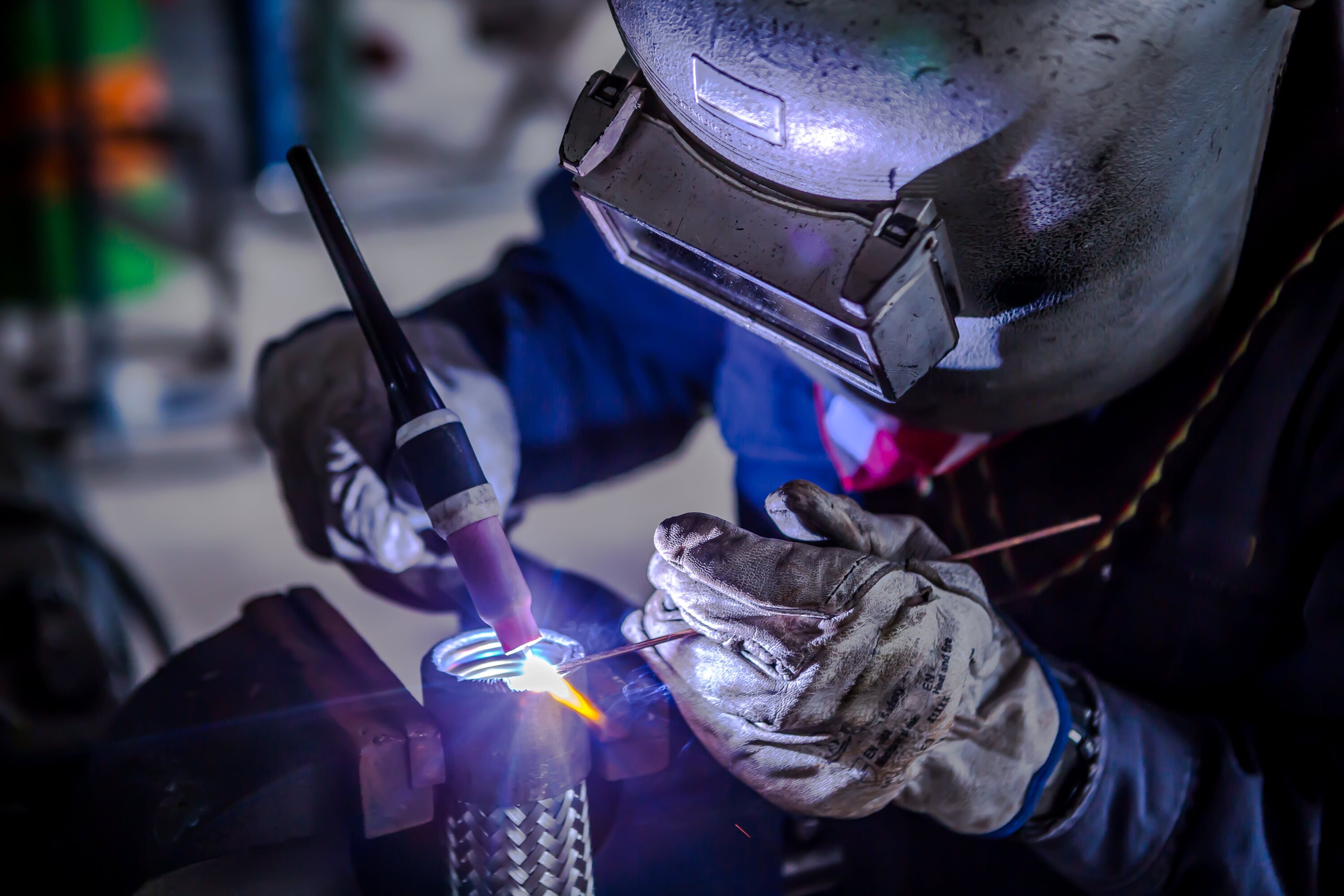
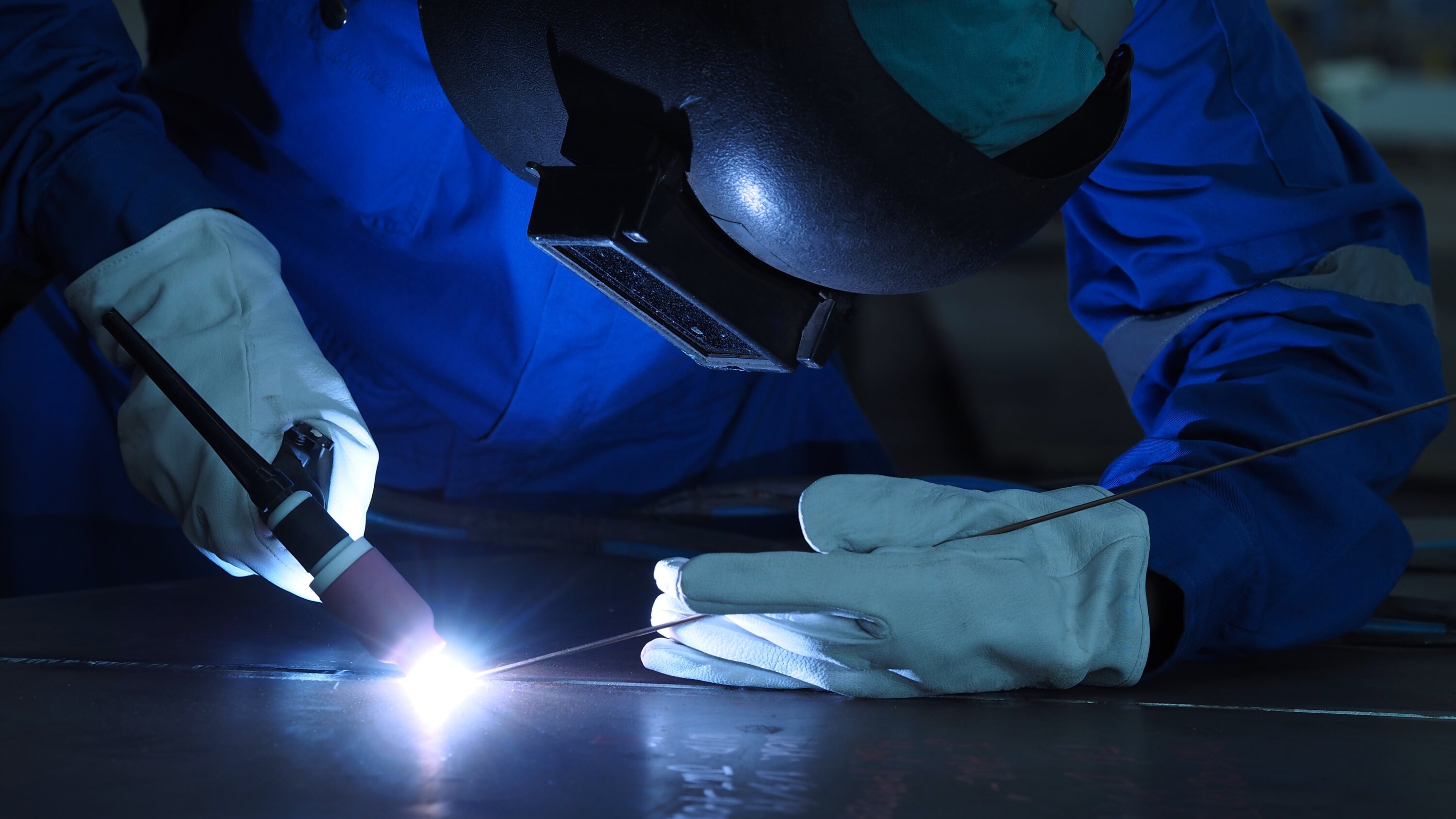
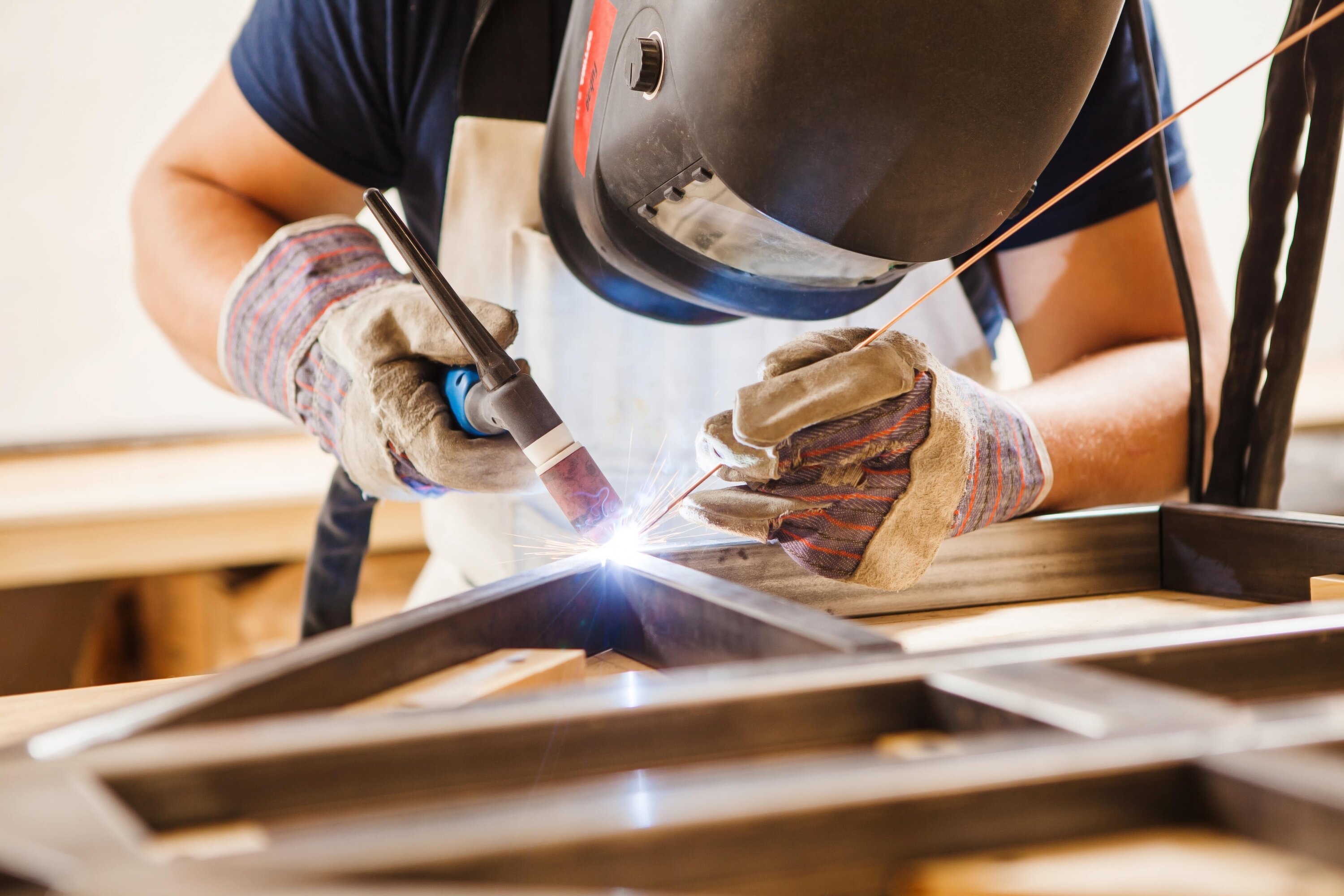
TIG Welding (Tungsten Inert Gas)
TIG produces the cleanest, most precise welds. It’s used on stainless steel, aluminium, and decorative metalwork. It takes patience and coordination, but the results can be professional-grade.
Best For:
- Automotive exhausts and custom parts
- Aluminium and stainless-steel fabrication
- High-quality, detailed work
Recommended:
- MAC AFRIC TIG Inverter Series: For advanced users ready to step up from MIG or Stick.
Gas vs Flux-Core: What’s the Difference?
| Type | Ideal For | Pros | Cons |
|---|---|---|---|
| Gas MIG | Indoor, workshop use | Clean, smooth beads | Needs shielding gas |
| Flux-Core | Outdoor, mobile work | Portable, wind-resistant | More spatter, needs cleanup |
Tip: Most MAC AFRIC MIG welders support both. Start with flux-core for convenience, then upgrade to gas once you’re comfortable.
Understanding Welder Technology: Inverter vs Transformer vs Laser
Transformer Welders
- Pros: Very durable and simple.
- Cons: Heavy and less adjustable.
- Example: Older-style MAC AFRIC MIG 195 Compact – still a favourite for workshop beginners.
Inverter Welders
- Pros: Energy-efficient, portable, precise arc control.
- Cons: More electronic components (requires care).
- Example: MAC AFRIC 160A MIG/MMA Inverter – smooth arc, compact design, easy LCD control.
Laser Welders (Advanced Use)
Laser welding uses focused light to fuse metal with pinpoint accuracy. Highly precise and used in automotive or jewellery industries, it’s not a beginner’s tool – but it represents the future of precision fabrication: extremely clean and fast with minimal distortion.
Choosing the Right Machine for Your Projects
| Project Type | Recommended Process | Example Machine |
|---|---|---|
| Building or fixing gates | Stick | MAC AFRIC 190A Arc Inverter |
| Vehicle bodywork | MIG (Gas or Flux) | MAC AFRIC MIG 160A Inverter |
| Garden furniture or décor | MIG or TIG | MAC AFRIC MIG 195 Compact / TIG Inverter |
| Heavy steel work | Stick | MAC AFRIC 190A MMA |
| Light aluminium / stainless work | TIG | MAC AFRIC TIG Inverter |
Key Features to Look For
- Adjustable Voltage & Wire Speed: Fine-tuning gives you control over penetration and bead shape.
- Dual-Function (MIG/MMA): Switch between MIG for light fabrication and Stick for outdoor work.
- Digital Display: Easier to read and repeat settings.
- Safety Features: Look for VRD (Voltage Reduction Device) and overload protection.
- Duty Cycle: Tells you how long you can weld before cooling. Aim for at least 10–20% at full load for hobby use.
Beginner Welding Do’s and Dont's
Do:
- Clean your metal before welding.
- Practise on scrap until your settings feel right.
- Allow the welder to rest between runs (respect duty cycle).
- Keep cables untangled and connections tight.
Don’t:
- Weld dirty or painted metal – causes porosity and weak joints.
- Run the welder continuously at full power.
- Ignore ventilation – welding fumes can be harmful.
Essential Safety Gear
- MAC AFRIC Auto-Darkening Welding Helmet (EWELDH005) – Protects eyes and face automatically.
- MAC AFRIC Green or Blue Welding Gloves – For heat and spatter protection.
- MAC AFRIC Chrome Leather Apron – Adds extra torso and leg safety.
- Wire Brush & Chipping Hammer Set – For slag removal and cleaning.
Next Steps: Building Skill Through Projects
- Garden gate repairs or hinges (Stick or MIG)
- Small metal table or frame (MIG)
- Braai stand or smoker box (Stick or MIG)
- Decorative shelves or brackets (TIG or MIG)
Final Thoughts
Your first welder should match your space, budget, and goals – not just the specs. If you’re just starting out:
- Choose MIG for easy learning.
- Pick Stick if you work outdoors.
- Upgrade to TIG once you’re confident with control and finish.
MAC AFRIC welders deliver reliability, support, and value across all skill levels – from entry-level MIGs to professional TIG inverters. Pair your machine with proper safety gear and consistent practice, and you’ll soon be fabricating with confidence – turning raw metal into something solid, functional, and proudly your own.
Beginner’s Guide to Buying a Welder

Starting Your Welding Journey
Getting into welding opens the door to countless possibilities – from fixing gates and trailers to building custom furniture, car parts, or outdoor projects. But for a beginner, choosing the right welder can feel overwhelming. Should you go for MIG, TIG, or Stick? What do inverter and transformer mean? This guide breaks it down simply, showing you which welder suits which type of project, what features actually matter, and how to get started safely with MAC AFRIC machines from Adendorff Machinery Mart.
MIG vs TIG vs Stick – Which Is Right for You?
MIG Welding (Metal Inert Gas)
MIG is the easiest process for most beginners. You pull the trigger, and wire automatically feeds through the torch like a “hot glue gun for metal.” It’s fast, clean, and ideal for projects where you want neat welds with minimal cleanup.
Best For:
- Car bodywork and exhaust repairs
- Building tables, shelves, or metal frames
- General household and DIY projects
Recommended:
- MAC AFRIC MIG 195 Compact: Perfect entry-level MIG for learning gas and flux-core welding.
- MAC AFRIC 160A MIG/MMA Inverter: Lighter, digital, and more adjustable for cleaner control.


Stick Welding (MMA / Arc)
Stick welding uses a coated electrode (“rod”) that melts and fuses metal while producing a gas shield and slag layer. It’s tougher to learn than MIG, but it’s inexpensive, portable, and great for outdoor jobs or thicker steel.
Best For:
- Farm repairs and heavy-duty gates
- Welding outdoors or in windy conditions
- Construction and maintenance work
Recommended:
- MAC AFRIC 190A MMA Inverter Welder: Compact, 6.3 kg, with arc-force and hot-start features. Great for beginners working outside the workshop.

TIG Welding (Tungsten Inert Gas)
TIG produces the cleanest, most precise welds. It’s used on stainless steel, aluminium, and decorative metalwork. It takes patience and coordination, but the results can be professional-grade.
Best For:
- Automotive exhausts and custom parts
- Aluminium and stainless-steel fabrication
- High-quality, detailed work
Recommended:
- MAC AFRIC TIG Inverter Series: For advanced users ready to step up from MIG or Stick.
Gas vs Flux-Core: What’s the Difference?
| Type | Ideal For | Pros | Cons |
|---|---|---|---|
| Gas MIG | Indoor, workshop use | Clean, smooth beads | Needs shielding gas |
| Flux-Core | Outdoor, mobile work | Portable, wind-resistant | More spatter, needs cleanup |
Tip: Most MAC AFRIC MIG welders support both. Start with flux-core for convenience, then upgrade to gas once you’re comfortable.
Understanding Welder Technology: Inverter vs Transformer vs Laser
Transformer Welders
- Pros: Very durable and simple.
- Cons: Heavy and less adjustable.
- Example: Older-style MAC AFRIC MIG 195 Compact – still a favourite for workshop beginners.
Inverter Welders
- Pros: Energy-efficient, portable, precise arc control.
- Cons: More electronic components (requires care).
- Example: MAC AFRIC 160A MIG/MMA Inverter – smooth arc, compact design, easy LCD control.
Laser Welders (Advanced Use)
Laser welding uses focused light to fuse metal with pinpoint accuracy. Highly precise and used in automotive or jewellery industries, it’s not a beginner’s tool – but it represents the future of precision fabrication: extremely clean and fast with minimal distortion.
Choosing the Right Machine for Your Projects
| Project Type | Recommended Process | Example Machine |
|---|---|---|
| Building or fixing gates | Stick | MAC AFRIC 190A Arc Inverter |
| Vehicle bodywork | MIG (Gas or Flux) | MAC AFRIC MIG 160A Inverter |
| Garden furniture or décor | MIG or TIG | MAC AFRIC MIG 195 Compact / TIG Inverter |
| Heavy steel work | Stick | MAC AFRIC 190A MMA |
| Light aluminium / stainless work | TIG | MAC AFRIC TIG Inverter |
Key Features to Look For
- Adjustable Voltage & Wire Speed: Fine-tuning gives you control over penetration and bead shape.
- Dual-Function (MIG/MMA): Switch between MIG for light fabrication and Stick for outdoor work.
- Digital Display: Easier to read and repeat settings.
- Safety Features: Look for VRD (Voltage Reduction Device) and overload protection.
- Duty Cycle: Tells you how long you can weld before cooling. Aim for at least 10–20% at full load for hobby use.
Beginner Welding Do’s and Don’ts
Do:
- Clean your metal before welding.
- Practise on scrap until your settings feel right.
- Allow the welder to rest between runs (respect duty cycle).
- Keep cables untangled and connections tight.
Don’t:
- Weld dirty or painted metal – causes porosity and weak joints.
- Run the welder continuously at full power.
- Ignore ventilation – welding fumes can be harmful.
Essential Safety Gear
- MAC AFRIC Auto-Darkening Welding Helmet (EWELDH005) – Protects eyes and face automatically.
- MAC AFRIC Green or Blue Welding Gloves – For heat and spatter protection.
- MAC AFRIC Chrome Leather Apron – Adds extra torso and leg safety.
- Wire Brush & Chipping Hammer Set – For slag removal and cleaning.
Next Steps: Building Skill Through Projects
- Garden gate repairs or hinges (Stick or MIG)
- Small metal table or frame (MIG)
- Braai stand or smoker box (Stick or MIG)
- Decorative shelves or brackets (TIG or MIG)

Final Thoughts
Your first welder should match your space, budget, and goals – not just the specs. If you’re just starting out:
- Choose MIG for easy learning.
- Pick Stick if you work outdoors.
- Upgrade to TIG once you’re confident with control and finish.
MAC AFRIC welders deliver reliability, support, and value across all skill levels – from entry-level MIGs to professional TIG inverters. Pair your machine with proper safety gear and consistent practice, and you’ll soon be fabricating with confidence – turning raw metal into something solid, functional, and proudly your own.